Quick answer: A Tampa HVAC website gets traffic but no calls when visitors land, fail to see a reason to trust the company fast, and cannot reach the phone in one tap. Most of those visitors are Tampa Bay homeowners who need help now. Traffic is a visibility win. Calls are a conversion win. The two are different problems. This guide shows HVAC contractors why the gap happens and how to close it.
Summary of Conversion Strategies for HVAC Leads
• Traffic measures who finds you. Calls measure who trusts you enough to act.
• Most HVAC website visitors in Tampa are on a phone and want help now.
• The four biggest call killers are slow load times, a buried phone number, weak trust signals, and a clunky path to contact.
• Conversion Rate Optimization (CRO) is the work of turning HVAC website visitors into paying customers.
• A slow lead response loses calls even after the website does its job. Instant response matters.
What does it mean when a website gets traffic but no calls?

It means people find your HVAC website but leave before they call or fill out a form. Search engines and your Google Business Profile send visitors. Something on the page stops them from acting. For a Tampa HVAC contractor, that gap is lost lead generation, since each visitor who leaves is a job that went to someone else.
Traffic and conversion are two separate jobs. Search engine optimization (SEO) and local SEO bring HVAC traffic, and your Google Business Profile sends even more. Conversion Rate Optimization turns that traffic into phone calls and booked jobs. You can win the first and still lose the second.
Here is the gap in plain terms:
Signal
What it tells you
What it does not tell you
Website traffic
People find your HVAC company
Whether they trust you
Time on page
People are reading
Whether they can reach you fast
Phone calls and form fills
People chose to act
Nothing missing, this is the goal
Why HVAC websites in Tampa fail to convert traffic into calls
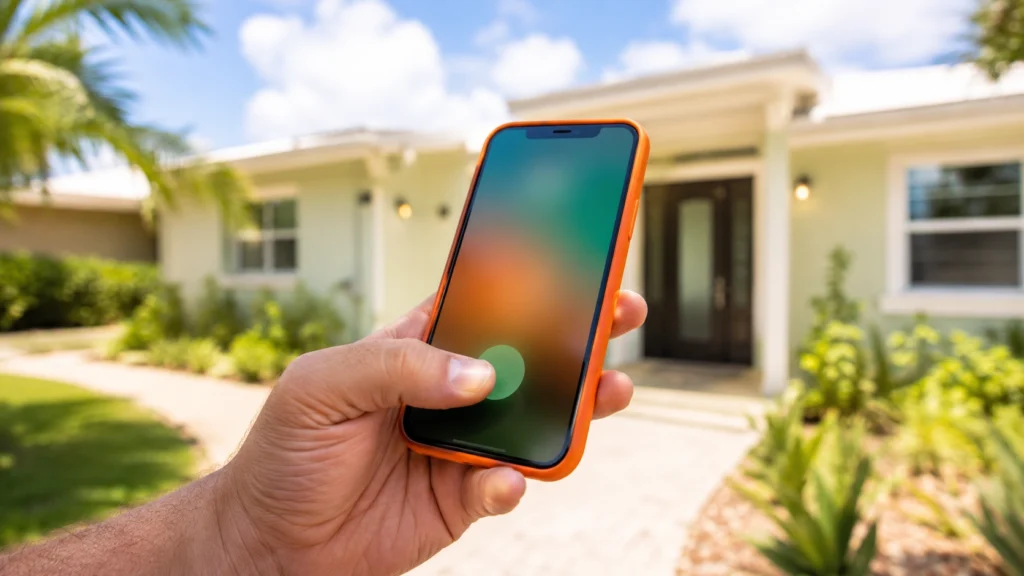
Five problems cause most of the lost calls. Fix these first.
Is your site mobile-friendly?
Most local HVAC searches happen on a smartphone, often during an AC breakdown in Tampa heat. Google reports that 76% of people who search for something nearby on their phone visit a business within a day. That intent is high, so a hard-to-use phone experience wastes it. If your HVAC website is hard to use on a phone, visitors bounce. Mobile optimization is the base layer of conversion. Buttons must be large. Text must be readable without pinching.
Can a visitor find your phone number in one second?
A buried phone number costs calls. Place a click-to-call button at the top of every page. Keep it sticky so it stays on screen while people scroll. One tap should start the call.
Does your page load fast?
Speed decides whether an emergency searcher waits or leaves. Google found that as a mobile page’s load time grows from one second to three seconds, the chance a visitor leaves rises by 32%. Aim for a load time under three seconds on mobile. Compress images, use modern formats like WebP, and cut heavy scripts. A slow HVAC website loses the visitor before they see your value.
Is your name, address, and phone the same everywhere?
Inconsistent NAP (Name, Address, Phone) confuses both customers and search engines. Your Google Business Profile, website, and directory listings should match exactly. A wrong or old number sends calls to a dead line.
Does the page give a reason to trust you?
Visitors call HVAC companies they trust. Without reviews, ratings, or proof of real work, a polished design still feels risky. Trust signals build credibility and turn a browser into a caller.
How do you turn HVAC website traffic into phone calls?
You add trust, remove friction, and make the next step obvious. Below are the practices that lift an HVAC website conversion rate the most.
Show trust signals near every call to action
Trust drives the decision to call. Put proof where people decide. BrightLocal’s 2025 survey found that 71% of consumers regularly read online reviews for local businesses, and 83% use Google to read them. Your reviews are doing the selling before you ever pick up the phone.
• Google reviews and testimonials: Show your star rating and recent reviews near the phone button. Testimonials that praise fast response and clean work speak to Tampa homeowners.
• Certifications and badges: Display NATE, ACCA, EPA, and BBB badges to confirm real expertise and credibility.
• Service guarantees: A clear promise like same-day service lowers hesitation.
• Photos of real jobs: Before-and-after images of completed work show quality better than stock photos.
Make the mobile experience effortless
Most calls start on a phone. Design for the thumb.
• Use a sticky header with a click-to-call button.
• Keep buttons large and easy to tap.
• Test the site on real phones and screen sizes, not just a desktop preview.
Write clear, urgent calls to action
Tell the visitor exactly what to do next. Use plain action words.
• Strong examples: “Call now for same-day AC repair” or “Book a free estimate today.”
• Place a call to action in the header, mid-page, and footer.
• Make the button color stand out from the rest of the page.
Shorten the path from landing to contact
Every extra step loses people.
• Keep contact forms short: name, phone, and the service needed.
• Use simple navigation with clear labels.
• State your service areas so the right Tampa Bay customers know you cover them.
Respond to leads in seconds, not hours
A great website still loses jobs when no one answers fast. Speed of reply is part of conversion. The first HVAC company to respond often wins the job.
Picture a 9pm AC outage in Brandon. The homeowner finds three HVAC companies on their phone and messages all three. Company A replies in 30 seconds and books the visit. Companies B and C reply the next morning to a job that is already gone. All three had traffic. Only one had speed. That is the gap between a website that ranks and a website that books.
We call this the Convert step. Your traffic is only potential until three things work together: a fast, mobile site, instant response, and follow-up that keeps the lead warm. This is where automation helps. An AI chat agent can capture a lead through text or chat the moment someone reaches out, day or night. Automated follow-up then texts and emails new leads within seconds, so a missed call does not become a lost customer. The website opens the door. Fast response closes it.
Keep your Google Business Profile and reviews active
Your Google Business Profile is often the first thing a Tampa customer sees. Keep the hours, services, and photos current. Ask happy customers for reviews, and reply to every review. An active profile feeds both your local SEO and your call volume. While on-page CRO handles the traffic once it arrives, you still need a steady stream of local visitors by ranking in the Google Local Pack.
Converting vs. non-converting Tampa HVAC site
Element
Site that loses calls
Site that books jobs
Phone number
Buried in the footer
Sticky click-to-call on every page
Mobile load time
Over five seconds
Under three seconds
Trust signals
None visible
Reviews and badges near each button
Lead response
Hours later
Instant text and chat reply
Call to action
“Contact us” only
“Call now for same-day AC repair”
Which pages lose the most calls: homepage, service pages, or landing pages?

Different pages have different jobs. Each one loses calls in its own way. Fix them in the order that visitors arrive.
Your homepage
Most visitors who type your HVAC company name land here first. A homepage loses calls when it tries to say everything at once. Lead with one clear promise, your phone number, your service area, and your star rating, so Tampa Bay homeowners know in seconds that they are in the right place. Then point people to the service they need.
Your service pages
Service pages target what people search, like AC repair in Tampa, AC installation, or heater repair. A service page loses calls when it reads like a brochure with no next step. Give each of your HVAC services its own service page. Cover the problem, your fix, your service area, proof, and a call button near the top and bottom.
Your paid landing pages
A landing page receives clicks from your PPC campaigns, like Google Ads or Meta Ads. It has one job: turn that paid click into a call. A landing page loses money when it sends paid traffic to a busy homepage. Build a focused page that matches the ad, repeats one offer, and shows one clear action. Strong landing pages protect your ad budget and lift the lead generation from every PPC dollar.
What we focus on when we rebuild a Tampa HVAC site for conversion
Lightning Leads Pro is a veteran-owned local SEO and website design company based in Riverview, FL, serving HVAC contractors across the Tampa Bay area. When we work on an HVAC website that gets traffic but no calls, we follow a clear process.
First, we audit how the site performs on a phone, since that is where most HVAC traffic lands. Next, we fix the basics that block calls: load speed, a sticky click-to-call button, consistent NAP, clear service pages, and trust signals placed where people decide. We also add schema markup so search engines and AI tools can read your services and reviews. Then we align your website design with your Google Business Profile and local SEO, so every channel points the same homeowners to one place. Finally, we connect the site to instant lead response through an AI chat agent and automated follow-up, so every lead gets a reply in seconds. We write the copy, you review and approve it before anything goes live, and you own your site at the end.
The goal is simple. Keep the traffic you already earn, and turn more of it into phone calls and booked jobs.
Which metrics tell you the site is converting?
Track these numbers to see what is working and what to change.
• Phone calls tied to website visits: Use call tracking to connect calls to pages.
• Click-through rate on call buttons: Shows whether your call to action gets tapped.
• Mobile bounce rate: A high rate points to a speed or design problem.
• Form completion rate: Shows whether your form is short enough to finish.
Test one change at a time. Try new headline wording, button color, or page layout, and keep what lifts calls. Fixing your website’s conversion leaks is the fastest way to boost the true ROI of your marketing campaigns without spending more on traffic.
Tampa HVAC website conversion checklist
Use this checklist to find the leaks on your own site. Each item is a common reason an HVAC website gets traffic but no calls.
• Phone number shows as a click-to-call button at the top of every page
• A sticky call button stays on screen while visitors scroll on mobile
• The site loads in under three seconds on a phone
• Your name, address, and phone (NAP) match across the site, Google Business Profile, and directories
• Google reviews and your star rating appear near each call button
• Certifications and licenses are shown, such as NATE, EPA, and your Florida HVAC license
• Each core service has its own service page
• Contact forms ask for only name, phone, and service needed
• Calls to action use clear words like “Call now for same-day AC repair”
• Every new lead gets an instant text or chat reply
• Your service areas across Tampa Bay are listed clearly
If you cannot check every box, those gaps are where your calls leak out.
Frequently asked questions
What is Conversion Rate Optimization (CRO) for an HVAC website?
Conversion Rate Optimization is the work of improving a website so more visitors take action, such as calling or filling out a service form. For an HVAC company, strong CRO means more booked jobs from the same traffic. It focuses on trust, speed, mobile design, and a clear next step.
Why does my HVAC website get traffic but no calls?
Your site likely brings visitors but gives them a reason to leave before they call. Common causes are slow load times, a hard-to-find phone number, weak trust signals, and a confusing path to contact. Fix those four areas first, then add instant lead response.
How important is mobile optimization for an HVAC website?
Mobile optimization is the base of HVAC website conversion. Most local service searches come from phones, often during an urgent repair. A fast, thumb-friendly site with a sticky click-to-call button turns more of those searches into calls.
What trust signals help an HVAC website convert?
Google reviews, star ratings, industry certifications like NATE and EPA, BBB accreditation, service guarantees, and photos of real jobs all build trust. Place them near your call buttons so people see proof at the moment they decide to call.
How fast should I respond to a website lead?
As fast as possible, ideally within seconds. The first HVAC company to reply often wins the job. An AI chat agent and automated follow-up keep every lead engaged until a person can take over.
Does a Google Business Profile affect website calls?
Yes. Your Google Business Profile is often the first contact a Tampa customer has with your HVAC company. An accurate, active profile with fresh photos and recent reviews drives both local SEO and direct calls.
What is a good conversion rate for an HVAC website?
Many local service sites turn 1 to 3 percent of visitors into calls or form fills. A well-optimized HVAC website often does better. Rather than chase one number, track your own rate over time and work to raise it with each change.
Why is my HVAC landing page not converting paid traffic?
A paid landing page usually fails when it does not match the ad or asks for too much. Send each Google Ads or Meta Ads click to a focused page with one offer, one clear action, and a phone number in view. Match the headline to the ad so visitors know they are in the right place.
How does page speed affect HVAC website conversion?
Speed shapes whether an emergency searcher waits or leaves. Slow pages raise bounce rates and cost calls. Aim for a load time under three seconds on mobile by compressing images, using formats like WebP, and cutting heavy scripts.
Do I need a separate page for each HVAC service?
Yes. Separate service pages help you rank for each search and give visitors a clear path to the help they need. A single page that lists every service ranks for none of them well and gives a weaker reason to call.
Ready to turn your Tampa HVAC traffic into calls?
You already earn the traffic. The next step is converting it. If you are ready to turn your website into a 24/7 lead-generation machine, partnering with an experienced Tampa HVAC SEO agency can help you optimize both your rankings and your conversion rates. Lightning Leads Pro helps HVAC contractors across Tampa Bay turn website visitors into booked jobs and outrank local competitors.
Book your free Local Lead Growth Session and we will show you where your site loses calls and how to fix it.
Sources
• Google, Think with Google: local search conversion statistics
• Google, Think with Google: mobile page speed industry benchmarks
• BrightLocal: Local Consumer Review Survey