AI SEO for Contractors: How to Remain Competitive in Tampa Bay
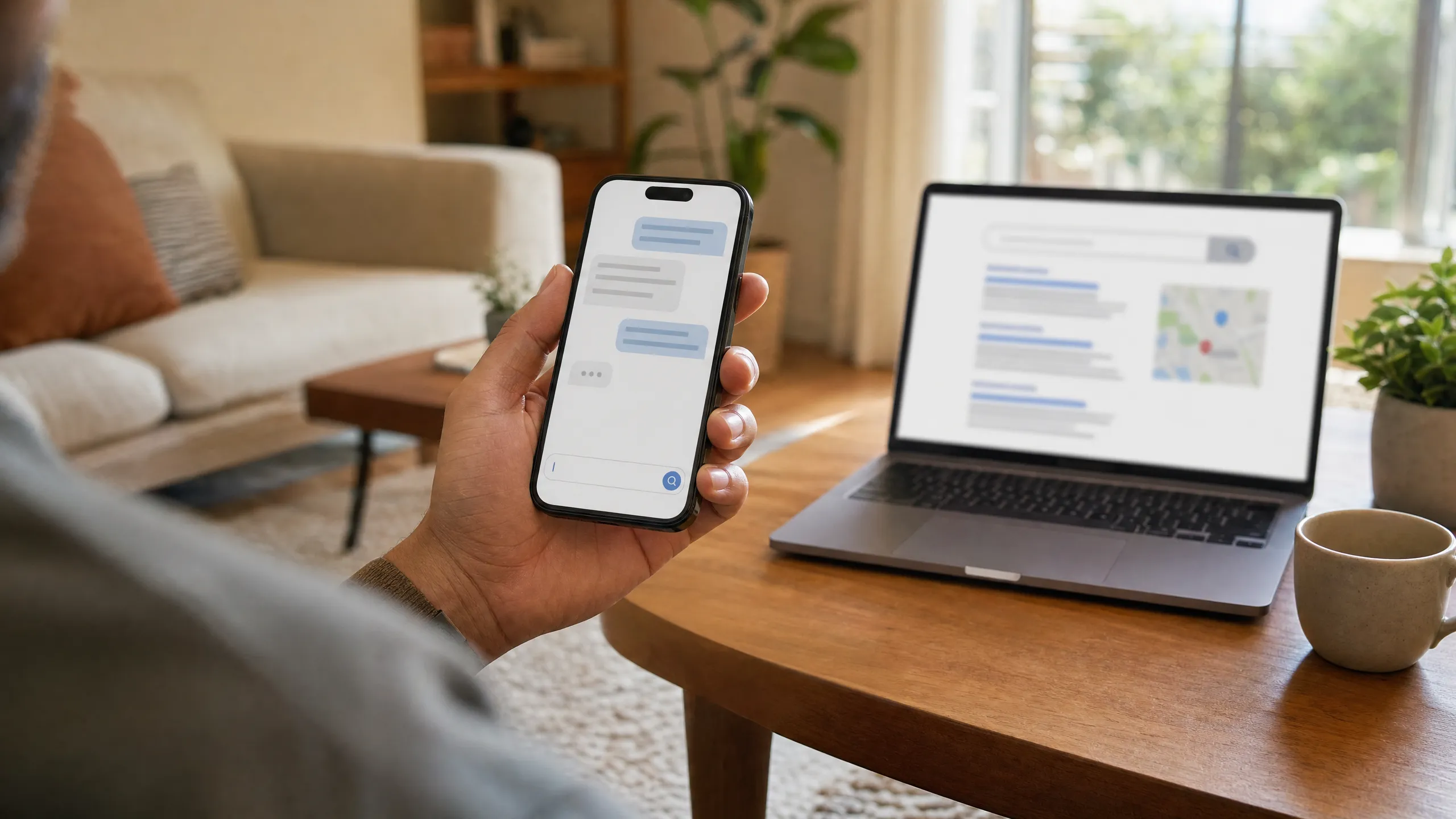
A homeowner in Wesley Chapel opens ChatGPT at 9 p.m., long after your office closed for the night, and types, “best AC repair company near me.” The app names three companies. Yours is not one of them, even though you have served that zip code for twelve years and have the reviews to prove it.
That is not a hypothetical. It is happening across Tampa Bay right now, quietly, with no obvious signal to tell you it happened. No missed call. No form abandoned halfway through. Just a homeowner who never knew you existed, choosing between the three names the AI gave her.
Waiting on AI SEO does not feel like losing anything at first. It feels like nothing at all, and that is exactly the problem. The businesses getting named are not necessarily better than yours. They just started building the signals AI systems trust before you did.
Key Takeaways
Homeowners increasingly ask AI tools for local business recommendations before they open a traditional search results page. BrightLocal’s 2026 research found 45 percent of consumers now use AI tools this way, up sharply from the year before.
A business left out of an AI-generated answer does not get a rejection. It gets skipped entirely, invisible during the “silent comparison” homeowners run before they ever pick up the phone.
The traditional fallback of still earning some traffic by ranking below the featured result is shrinking too. Ahrefs found that AI Overviews already cut organic click-through by roughly a third, which makes being named inside the answer worth more than it used to be.
AI SEO compounds. The businesses building citation history and structured content now are training AI systems to trust them while competitors wait, and every month waited is a month that head start gets harder to close.
What AI SEO Visibility Actually Means
Traditional SEO earns a spot in the list of results. AI SEO, sometimes called answer engine optimization, earns something different: a mention inside the answer an AI tool writes and hands the homeowner directly, often before she ever sees a list of links to click.
Google’s own explanation of how AI Overviews work describes a system that pulls together information from across the web to generate a synthesized answer on the results page itself. ChatGPT, Perplexity, and Gemini run on a similar principle when someone asks a local question out loud or types it into a chat window. The mechanics differ by platform, but the outcome for a contractor is the same: ranking well is no longer the same thing as being visible. A business can sit on page one of Google and still never get named when a homeowner asks an AI tool who to call.
That distinction is the whole risk. Ignoring AI SEO does not mean falling a few spots on a page. It means being absent from a conversation that is already deciding who gets the call.
The Silent Comparison Happens Before the Phone Ever Rings
Homeowners do not typically call a contractor to find out if the company is any good. They decide that first, quietly, then call whoever survived the comparison. That has been true for years with reviews and star ratings. AI tools have simply compressed the process into a single question and a short list of names.
The BrightLocal research cited above also found that most homeowners who use AI recommendations still cross-check them against real reviews before committing, which means the businesses that show up in the AI answer are getting a second look too, while everyone left out never gets considered at all. The comparison happens entirely off your website, off your Google Business Profile, and off any analytics dashboard you might check. There is no bounce rate for a conversation that never mentioned you.
That is why this risk is so easy to ignore. A missed lead from a slow website shows up somewhere, eventually, in a drop-off you can trace. A missed recommendation from an AI tool never shows up anywhere. The homeowner books the job, the AI never mentions you existed, and the only evidence is a call volume that quietly stays flatter than it should.
What Happens When You're Left Out of the Answer
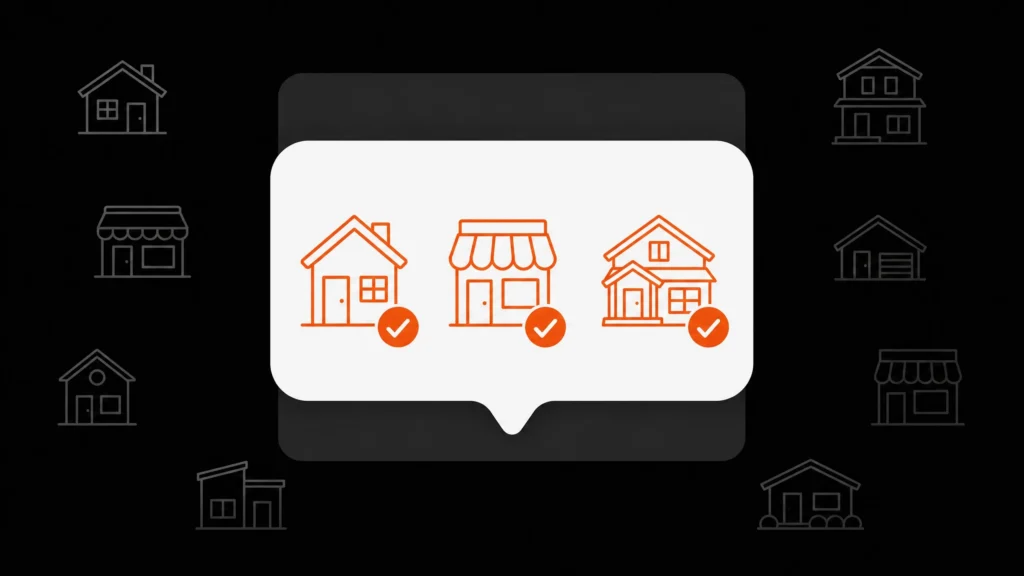
On a traditional results page, ranking eighth still gets some clicks. There is a scroll, a list, a chance a homeowner keeps reading past the first few names. An AI answer does not work that way. There are three or four names, and everyone else.
That shift matters more because of what is happening to the traffic below the AI answer, not just inside it. Ahrefs’ research, cited above, found organic click-through rates dropping by roughly a third on searches where an AI-generated answer appears first. The consolation prize contractors used to count on, ranking respectably and picking up whatever traffic trickled down past the featured spot, is worth less than it used to be. Being left out of the answer is not a smaller version of ranking poorly. It is a different, harder kind of invisible.
None of this means a business with weak AI visibility gets zero leads. It means a growing share of the easiest, highest-intent leads, the homeowner who already decided and is ready to book, go to whichever two or three companies the AI named. Everyone else is competing for what is left.
Why Early Movers Compound and Latecomers Play Catch-Up
AI systems do not decide who to name the way a person picks a favorite. They build confidence in a business the way any source builds credibility: repeated, consistent signals over time. Structured data that clearly states what a business does and where. A business name, address, and phone number that match everywhere. Content that answers real questions plainly enough for a model to lift a direct answer out of it. Reviews that keep arriving, not a pile from three years ago.
That is closer to a reputation than a setting. It is not something a business turns on this week and sees fully reflected next week, which is exactly why the businesses that started building it months ago are pulling ahead of the ones just getting started now. We have seen that compounding effect firsthand: one of our clients is currently recommended by ChatGPT, Perplexity, and Gemini simultaneously for their core service, a result built from structured data, consistent citations, and content organized to be quoted, developed months before most competitors in that market were paying attention to any of it. This is the kind of work that sits inside our Appear Everywhere Framework, treating Google rankings, AI answers, and everywhere else a homeowner might look as one connected system instead of separate problems competing for attention.
The catch-up problem is what makes waiting expensive in a way that is hard to see month to month. Once a competitor becomes the default answer an AI system reaches for in a service area, displacing them means building an equal or stronger signal history, not simply outspending them for a week. Budget can accelerate the work. It cannot skip the part where an AI system needs time and repetition to trust a source.
Visibility Without Fast Follow-Up Still Costs You the Job
Getting named is not the finish line. A homeowner comparing two or three AI-recommended contractors typically calls or messages more than one of them, and whoever responds first often wins the job regardless of who the AI listed first.
That is where AI follow-up matters, not just automated follow-up. A bot that fires back “thanks, someone will reach out soon” does not hold that moment. An AI assistant that replies within seconds, answers the homeowner’s actual question, qualifies the job, and books the appointment on the spot is what keeps the trust an AI recommendation already built. A contractor who wins the AI visibility fight and then loses the follow-up race still loses the job. Waiting on either half of that system costs the same thing: a homeowner who moves on to the next name on her short list.
The Rising Influence of AI Search on Local Contractor Leads
We are a veteran-owned SEO agency, and we work with one contractor per trade, per city. When an HVAC company claims their city with us, HVAC closes to their competitors there.
We back the work with a 90-day conditional guarantee. We define measurable progress upfront. If we do not deliver it, we keep working at no charge until we do. No ranking promises, because no one controls Google. Accountable, measurable progress instead.
Frequently Asked Questions
What does it actually mean if my business doesn't show up when someone asks ChatGPT or Google's AI for a recommendation?
It means the AI system does not have enough consistent, structured information about your business to name it with confidence. It is not a penalty and it is not personal. AI systems recommend what they can verify, and if your citations, reviews, and content do not add up to a clear, current picture, they name a competitor instead.
How is this different from just falling behind on regular SEO?
Falling behind on traditional SEO usually means a lower spot on a results page, where a homeowner might still scroll far enough to find you. Falling behind on AI SEO means being absent from a short list of names an AI tool hands a homeowner directly, with no scrolling involved and no guaranteed second chance to be seen.
How long does it take to start showing up in AI-generated answers?
There is no fixed timeline, because AI systems build trust in a business the same way they build trust in any source, through repeated, consistent signals over time. Businesses that start now are building that history today. Businesses that wait are not building anything at all.
Is it too late to catch up if competitors are already showing up in AI answers?
No, but catching up means matching or beating whatever signal history a competitor has already built, rather than starting from a blank page. The gap is closable. It simply gets wider, and more expensive to close, the longer it sits unaddressed.
The Gap Gets Wider While You Wait
Nothing about ignoring AI SEO produces an alarm. No error message, no ranking drop to screenshot, just a quieter phone than the trucks and the reviews say it should be. The businesses closing that gap right now are not doing anything mysterious. They are building the same consistent, structured, current signals AI systems have always rewarded, and they are doing it while some competitors are still deciding whether any of this is real.
Want to know where your business actually stands the next time a homeowner asks an AI tool who to call? Book a Free Local Lead Growth Session and we will show you the real answer instead of a guess.