
An HVAC service agreement is a yearly plan. The homeowner pays you for scheduled tune-ups and a few member perks. Fall is a good time to sell one. You are already in homes for heating checks, and the winter rush has not started.
This guide covers what to put in the agreement. It also covers how to offer it by phone and at the visit. It also covers renewal reminders, and how plan members bring in reviews and repeat work. Some owners call it an HVAC maintenance agreement or a maintenance plan. The steps are the same.
Why fall is the right time to sell an HVAC service agreement
ENERGY STAR recommends checking the heating system in the fall and the cooling system in the spring. Its reason is simple. Contractors get busy once summer and winter come. That timing gives you two natural visits a year to build a plan around.
A fall tune-up is also a calm visit. The homeowner is not cold or stressed yet. Your tech has time to explain what they found and what a plan would cover. Have you sent your fall reminder to past customers yet? Our HVAC marketing ideas for heating season walk through that step.
A plan helps your calendar, too. Members book their visits in spring and fall, not only when something breaks. That gives your techs planned work between the summer and winter peaks.
What to include in your HVAC service agreement
Keep the plan simple enough to explain in one minute. Most plans are built from the same few parts. Write each one down so your office, your techs and your customers all read the same thing.
- Visits per year. For example, one heating visit in the fall and one cooling visit in the spring. That matches the ENERGY STAR timing.
- What every visit covers. List the checks in plain words. The ENERGY STAR contractor checklist includes thermostat settings, electrical connections, moving parts, the condensate drain and system controls.
- Heating and cooling checks. For heating, the checklist names gas or oil connections and gas pressure. It also names burner combustion and the heat exchanger. For cooling, it names the coils, refrigerant level and blower parts.
- Member perks. Pick perks you can deliver every time, such as priority booking or a set repair discount. Do not promise more than your schedule can hold.
- Term and renewal. Say how long the plan lasts, how it renews and how the customer cancels.
- What is not covered. Name the exclusions in the agreement itself, not in a phone call later.
Set the price from your own numbers: tech time, drive time, filters and the cost of each perk. We do not list plan prices here. Your costs and your market set the right number.
Write terms customers can read, then have an attorney check them
Vague terms cause trouble later. The consumer site Checkbook reports a common complaint from contract holders: waiting weeks for a repair visit. It also hears from customers whose techs found something to repair at every visit, at extra cost.
Use those complaints as your checklist. If you promise priority service, define what it means and staff for it. If a tech finds a problem, show the customer and let them decide without pressure.
Write the agreement in plain words, at the reading level of a utility bill. Then have a local attorney review it before you sell it. Ask them to look closely at renewal, cancellation and billing terms. This post is not legal advice.
How to present the plan on the phone
Your office manager or CSR is often the first person to mention the plan. Keep it short and tie it to the reason for the call. A homeowner booking a fall tune-up is the easiest person to ask.
A simple script works better than a sales pitch. Here is one way to do it:
- Confirm the visit: “We have you down for Tuesday morning for your heating check.”
- Mention the plan once: “We also have a yearly plan that covers your fall and spring visits, with priority booking.”
- Hand it to the tech: “Your tech can walk you through it on Tuesday. No pressure at all.”
Log every plan offer and every answer. That way the tech knows before arriving, and nobody asks the same question twice. Our guide to choosing an HVAC CRM that follows up on every lead covers tools that track this.
How to offer the plan at the tune-up visit
The visit is often the best place to offer the plan. The tech has just done the work and can show what they checked. That is the best proof the plan is worth it.
- Finish the tune-up and walk the homeowner through what you checked.
- Show photos of anything that needs attention. Give a written quote if a repair is needed.
- Explain the plan in three parts: the visits, the perks and how renewal works.
- Leave a printed or emailed copy of the agreement so they can read it later.
- Ask once. If they say no, thank them and leave the copy.
Train techs to sound like advisors, not salespeople. Extra repairs at every visit are exactly what the Checkbook complaints describe. A calm explanation fits the trust your tech built during the visit.

Set up renewal reminders for your HVAC maintenance plan
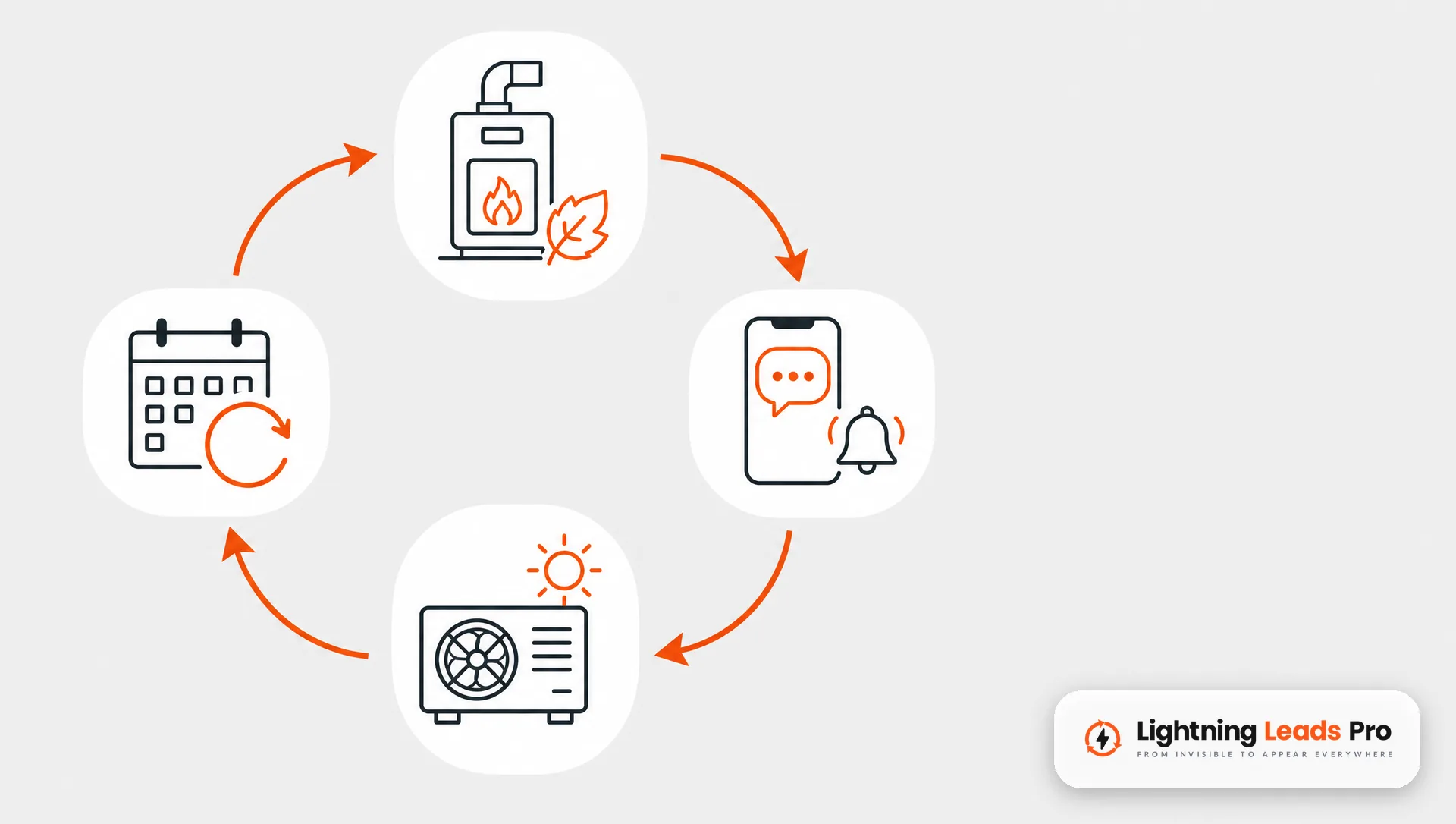
A plan only pays off when members book their visits and renew. Members get busy, and dates slip. Reminders keep the plan moving without your office making every call.
- Visit reminders. Send a text or email a few weeks before each season to book the fall or spring visit.
- Renewal notice. Send a notice well before the plan ends, such as at 60 and 30 days. Include the renewal date and terms.
- Missed visit follow-up. If a member has not booked by mid-season, have someone call them.
- Visit summary. After each visit, confirm what was done and when the next visit is due.
Get permission before you text, and ask your attorney about the rules for texting customers. For email, see the FTC’s CAN-SPAM compliance guide. Commercial emails need a way to opt out and your physical postal address. Opt-out requests must be honored within 10 business days.
Once they are set up, these reminders can run on their own. That is the kind of work our AI automation for HVAC companies handles. Nobody has to track renewal dates on a spreadsheet.
How plan members lead to reviews and repeat work
Members see your techs at least twice a year. Each visit is a chance to earn a review. It is also a chance to be the first call when something breaks.
Ask every member for a review after each visit, not only the ones who seem happy. Google’s review policy says businesses may not selectively ask for positive reviews. It also bans incentives such as discounts or free service in exchange for a review. So never tie a plan perk to a review.
Make the ask easy. Google suggests sharing a review link or QR code with customers. Add the link to your visit summary text or email.
Replies matter too. When members see you answer every review, it shows someone is paying attention. Our reputation management for HVAC companies covers review requests and replies.
Repeat work follows trust. When a member’s system needs a repair or a new unit, you already know the equipment. The homeowner already knows your tech. That is a much warmer call than a stranger from a search.
Market your HVAC service agreement on your website and Google Business Profile
Homeowners who look for a maintenance plan should be able to find yours. Give the plan its own page on your website. Explain what is included, how visits are booked, and how renewal and cancellation work.
- A plain list of what each visit covers.
- The member perks, in the same words as your agreement.
- Answers to common questions, like what the plan does not cover.
- A clear button to sign up or call.
On your Google Business Profile, add the plan as a service. Google’s help page on services shows how to add a custom service with a price and a description. Google’s help page says to leave prices and phone numbers out of custom service names.
You can also post about the plan this fall. Google offers three post types: updates, offers and events. An offer post needs a title and dates. Posts older than six months are archived unless you set a date range.
Want to hand this off? Our Google Business Profile management keeps services, posts and photos current through the season.
Frequently asked questions
What is an HVAC service agreement?
It is a yearly plan between an HVAC company and a homeowner. It usually covers scheduled tune-ups plus member perks. It is also called an HVAC maintenance agreement, maintenance plan or service contract.
What should an HVAC maintenance agreement include?
List the visits, what each one checks and the member perks. Add the term, renewal and cancellation, and what is not covered. Write it in plain words so customers know what they bought.
Are HVAC maintenance plans worth it for homeowners?
It depends on the plan. Checkbook notes that for maintenance-only contracts, the most common exclusion is coil cleaning. A plan is worth more when the terms say plainly what is covered and what is not.
How often should an HVAC system be serviced?
ENERGY STAR recommends annual pre-season checkups by a contractor. It suggests the heating system in the fall and the cooling system in the spring.
Do I need a lawyer for an HVAC service contract?
We suggest it. Have a local attorney review your agreement before you sell it, especially the renewal, cancellation and billing terms. Get advice for the state where you work.
How much should I charge for an HVAC service agreement?
Start from your costs: tech time, drive time, parts like filters and each perk you offer. Then compare with what the same visits cost without a plan. Your market sets the final number.
Get your maintenance plan in front of more homeowners
A good plan still needs people to find it. Fall is the time to get your plan page, profile and reminders in place before the heating rush.
If you want help getting your HVAC company seen on Google and in AI answers, start with a short call. Book a Free Local Lead Growth Session and we will look at where you show up today.