A good HVAC marketing plan answers three questions. Where did your calls come from this year? What do you want next year? Where will each dollar and hour go?
You can answer all three this fall. This guide walks you through a 2027 plan in six steps. You will review your numbers, set goals and pick channels. Then you will map the seasons, choose a budget method and set a monthly review.
For things to do in the next few weeks, see our HVAC marketing ideas for heating season. This post is about next year.
Why build your HVAC marketing plan in the fall
Fall is a good time to plan. The cooling rush is over, and you have most of this year’s results to look at. Heating calls are starting.
ENERGY STAR’s maintenance checklist tells homeowners that contractors get busy once summer and winter come. It advises checking the cooling system in the spring and the heating system in the fall. Your plan should be ready before each of those windows opens.
The SBA also suggests keeping a marketing plan on an annual basis, at minimum. A plan written in October or November gives you time to fix pages, profiles and tracking before January.
Step 1: Look back at this year’s calls and jobs by source
You want one simple table. List each source, the calls or form leads it sent, the booked jobs and what those jobs were worth. Rough numbers are fine. A guess written down beats no record at all.
Here is where to find the numbers for most HVAC companies:
- Google Business Profile. The performance report shows calls, website clicks and direction requests. It also shows the search terms people used to find you.
- Your website. Google Search Console’s Performance report shows clicks, impressions, queries and pages from Google Search.
- Paid ads. If you run Google Ads, call reporting tracks call duration, start time and whether the call connected.
- Your booking or dispatch software. Pull jobs by lead source. If your team does not record the source, start now.
- Repeat and referral work. Count jobs from past customers, plan members and referrals. These often get left out.
Look for patterns, not perfect data. Which source brought the most booked jobs? Which one brought calls that rarely booked? Did any month go quiet that you did not expect?
Want more detail on what to track? Our post on key metrics for HVAC SEO covers booked jobs, map rankings, reviews and AI visibility.
Step 2: Set two or three goals for 2027
Keep the list short. Two or three clear goals are easier to track than ten loose ones. Tie each goal to jobs or revenue, not just clicks.
Good goals are specific and have a date. Here are a few examples of the shape a goal can take:
- Book more heat pump installs from the web by the end of the second quarter.
- Add a set number of new maintenance plan members before next summer.
- Start getting calls from a nearby town where you do not show up today.
- Answer every missed call with a text the same day.
Pick the number for each goal from your own table in Step 1. Your history is the best guide to what is realistic for your company.
Step 3: Pick your channels for the Appear Everywhere mix
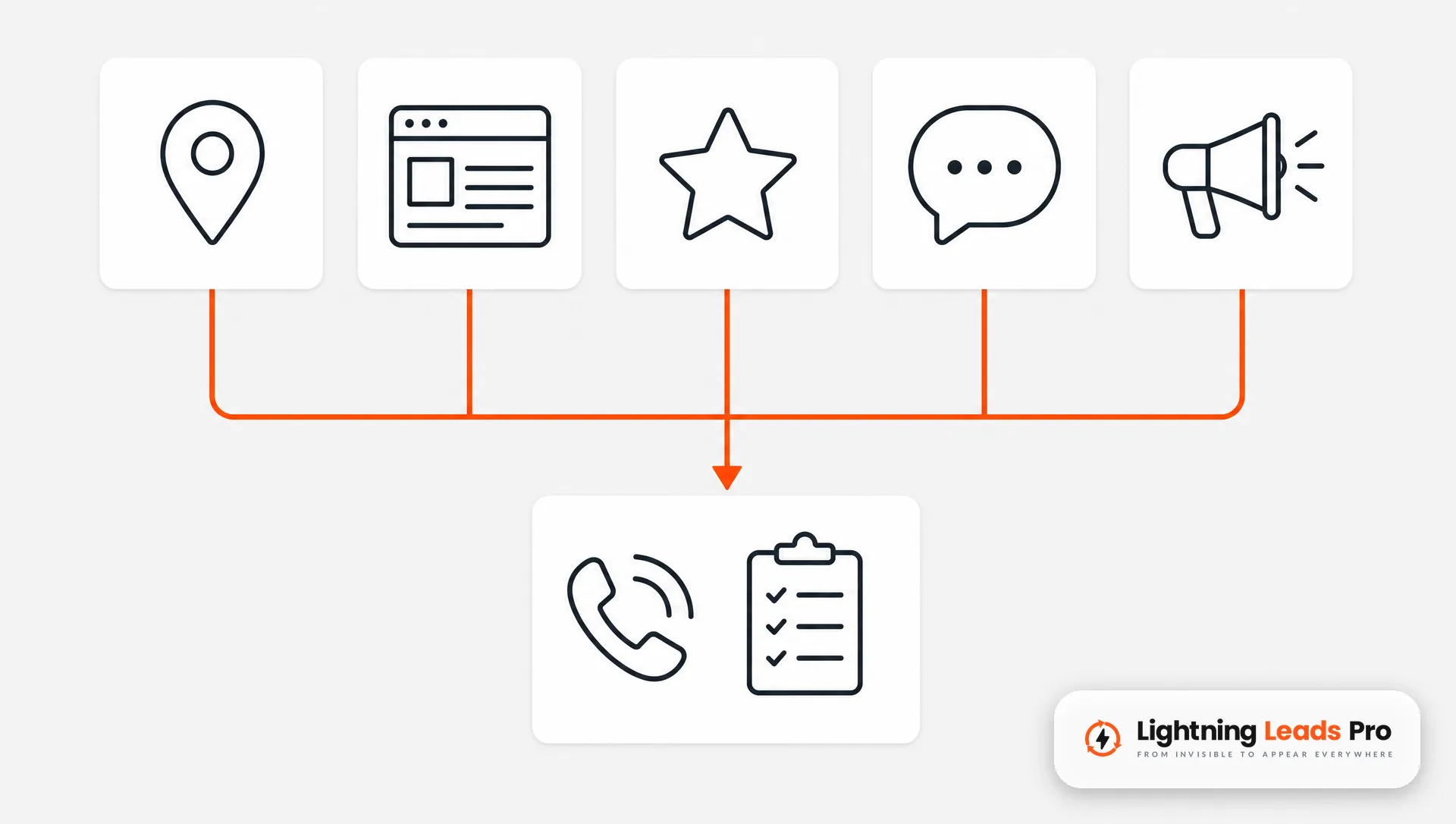
Homeowners look for HVAC help in more than one place. They check Google Maps, search results, reviews and, more and more, AI tools. We call covering all of these the Appear Everywhere approach. Your plan should name who handles each channel and what gets done each month.
Google Business Profile and the map pack
Your profile is one of the first places a homeowner may see you. Plan regular updates: services, real job photos, posts and correct hours. Our Google Business Profile management service handles this for owners who would rather hand it off.
Local SEO service pages
Each main service and each key town you serve deserves a clear page. List the pages you have, then list the ones you are missing. Plan to add or improve a few each quarter. This is the core of local SEO for HVAC companies.
AI search
BrightLocal’s 2026 Local Consumer Review Survey found that 45% of consumers used AI to find local business recommendations. A year earlier, that figure was 6%. Plan time for plain answers to common customer questions on your service pages. Keep your name, phone number and service areas the same everywhere.
Reviews
Set a simple rule: ask every customer after every job. Google suggests asking with a link or a QR code. It also bans offering discounts or other rewards for reviews. Plan who sends the request and who replies to each review.
Paid ads for the gaps
Ads work best as a tool for specific gaps. One example is a new service area where you do not show up in the map pack yet. Another is a service you want to grow.
Ads can also cover a slow month. Write down the gap each campaign is meant to fill. Our paid ads team builds campaigns around that kind of goal.
Step 4: Plan the year around cooling and heating seasons
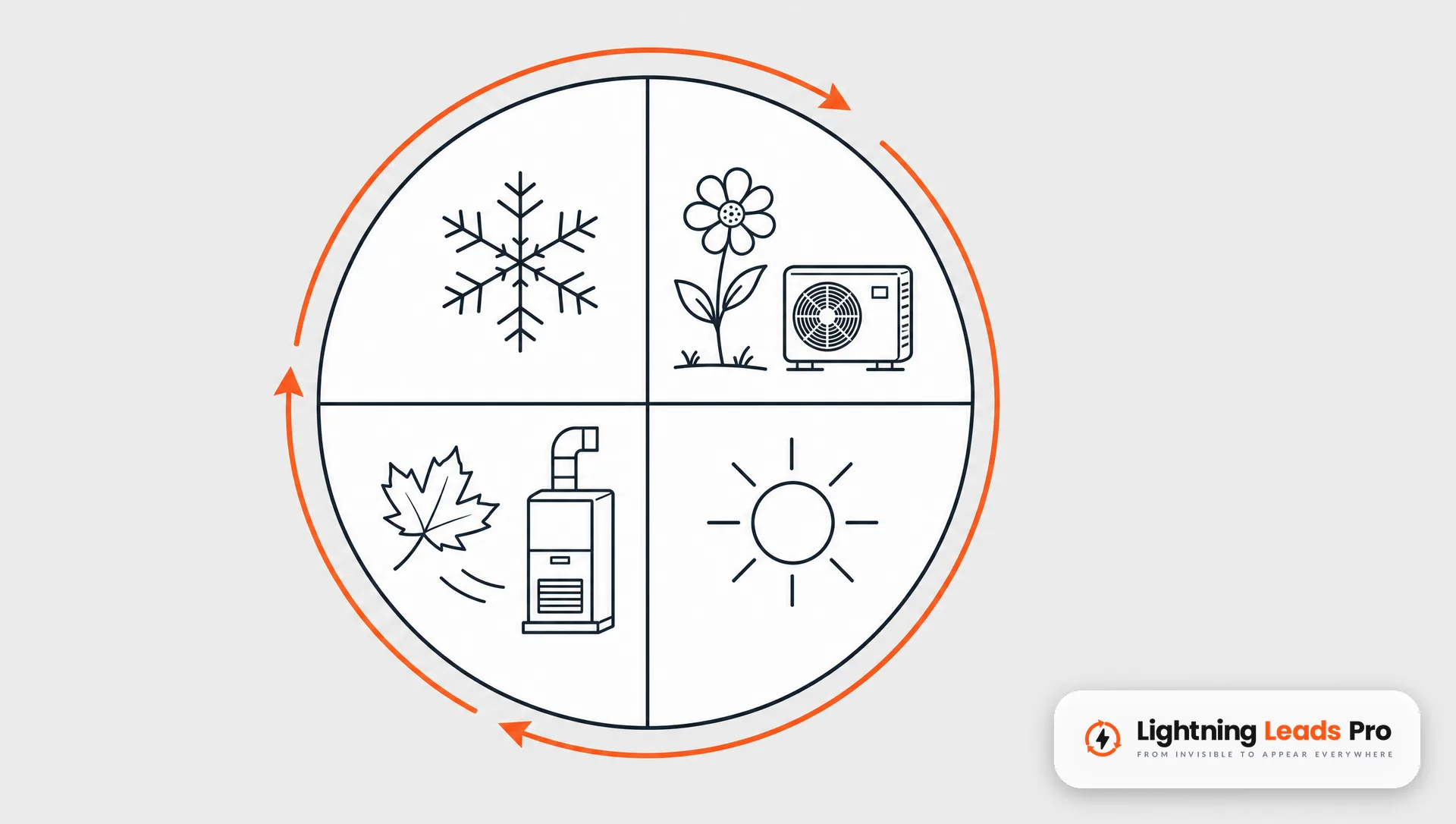
HVAC demand follows the weather, so your plan should too. Map out each quarter so the right message is live before each busy season starts. Here is one simple way to lay out the year:
- Q1 (January to March): Focus on heating repair and no-heat calls. Then start spring work early: cooling tune-up reminders and AC service page updates.
- Q2 (April to June): Cooling calls often pick up. Promote tune-ups and AC repair. Push maintenance plan signups and review requests while the schedule allows.
- Q3 (July to September): Cooling calls often peak. Keep ads tight, answer fast and collect reviews from every job.
- Q4 (October to December): Heating calls often pick up. Promote heating tune-ups and furnace or heat pump work. Review the year and write next year’s plan.
Your local weather may shift these dates. Use your own monthly job counts from Step 1 to set the real timing for your area.
Step 5: Choose an HVAC marketing budget method
There is no single right number for every HVAC company. Your size, margins, goals and local competition all matter. What matters most is that you pick a method and write it down.
Here are three common ways owners set a marketing budget:
- Percentage of revenue. A 2019 guest post on the SBA’s older website notes that many businesses use a percentage of revenues as a guide. Startups can use projected revenue instead. Pick a percentage that fits your margins and goals, then hold to it.
- Goal-based. Start with the jobs you want. Use your Step 1 table to see what a booked job cost you from each source. Then work backward to the spend each goal needs.
- Foundation plus flexible. Set a steady monthly amount for long-term work like your profile, service pages and reviews. Then add a separate, flexible amount for ads that you raise or lower by season.
If you run Google Ads, know how daily budgets work. Google says it can spend up to two times your average daily budget on a given day. Monthly charges stay at or below 30.4 times your average daily budget for most campaigns. Plan your seasonal ad budgets with that in mind.
Whatever method you choose, the SBA says to compare your marketing and sales costs to the revenue they bring in. That check is what Step 6 is for.
Step 6: Hold a short monthly review
A plan only helps if you look at it. Block 30 minutes once a month with whoever handles your marketing and your office. Use the same table from Step 1 each time.
- Calls, form leads and booked jobs by source for the month.
- Spend by channel compared with the jobs it brought in.
- Progress on each 2027 goal.
- One thing to start, one thing to stop and one thing to fix next month.
Keep notes from each review. By next fall, those notes become the first draft of your 2028 plan.
Frequently asked questions
How much should an HVAC company spend on marketing?
There is no single right number. Some owners use a percentage of revenue. Others start from goals and work backward. Pick a method that fits your margins, then compare spend to the jobs it brings in.
How do I write a marketing plan for my HVAC company?
Review this year’s calls and jobs by source. Set two or three goals, pick your channels and map them to the seasons. Then choose a budget method and review results every month.
When should I start planning next year’s HVAC marketing?
Fall works well for many owners. The cooling rush is over, and you have most of this year’s results to study. That leaves time to fix pages and tracking before January.
What is the best marketing channel for HVAC companies?
It depends on your market and goals. Many owners use a mix: a Google Business Profile, local service pages, reviews and paid ads for specific gaps. Your own job data shows which channels work best for you.
How often should I update my HVAC marketing plan?
Review results monthly and adjust small things as you go. The SBA suggests keeping a marketing plan on an annual basis at minimum. A full rewrite once a year, in the fall, keeps it current.
Start your 2027 HVAC plan this month
You do not need a thick binder. You need one table of results, a few goals and a channel list. Add a seasonal calendar and a budget method, and you have a plan for the year. Start with Step 1 this week while this year’s numbers are fresh.
Lightning Leads Pro is a veteran-owned, bilingual local SEO and AI search agency for HVAC companies. Want help reading your numbers and picking your channels? Book a Free Local Lead Growth Session. We will look at where your calls come from today and what to focus on in 2027.