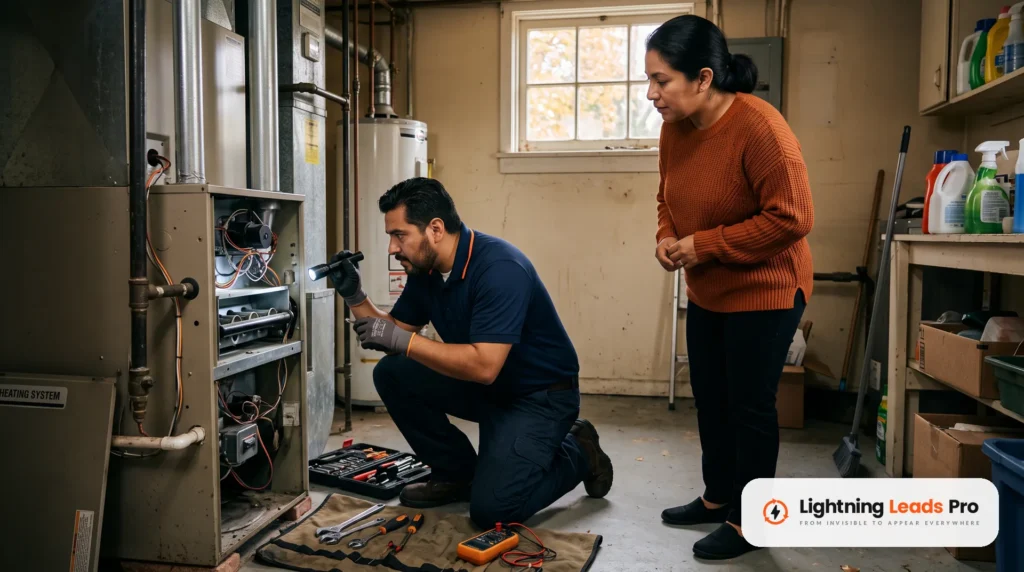
It is the first cold night of the season. A furnace quits at 2 in the morning, and the house starts to cool. The homeowner calls the first HVAC company they find. If nobody answers, they call the next one.
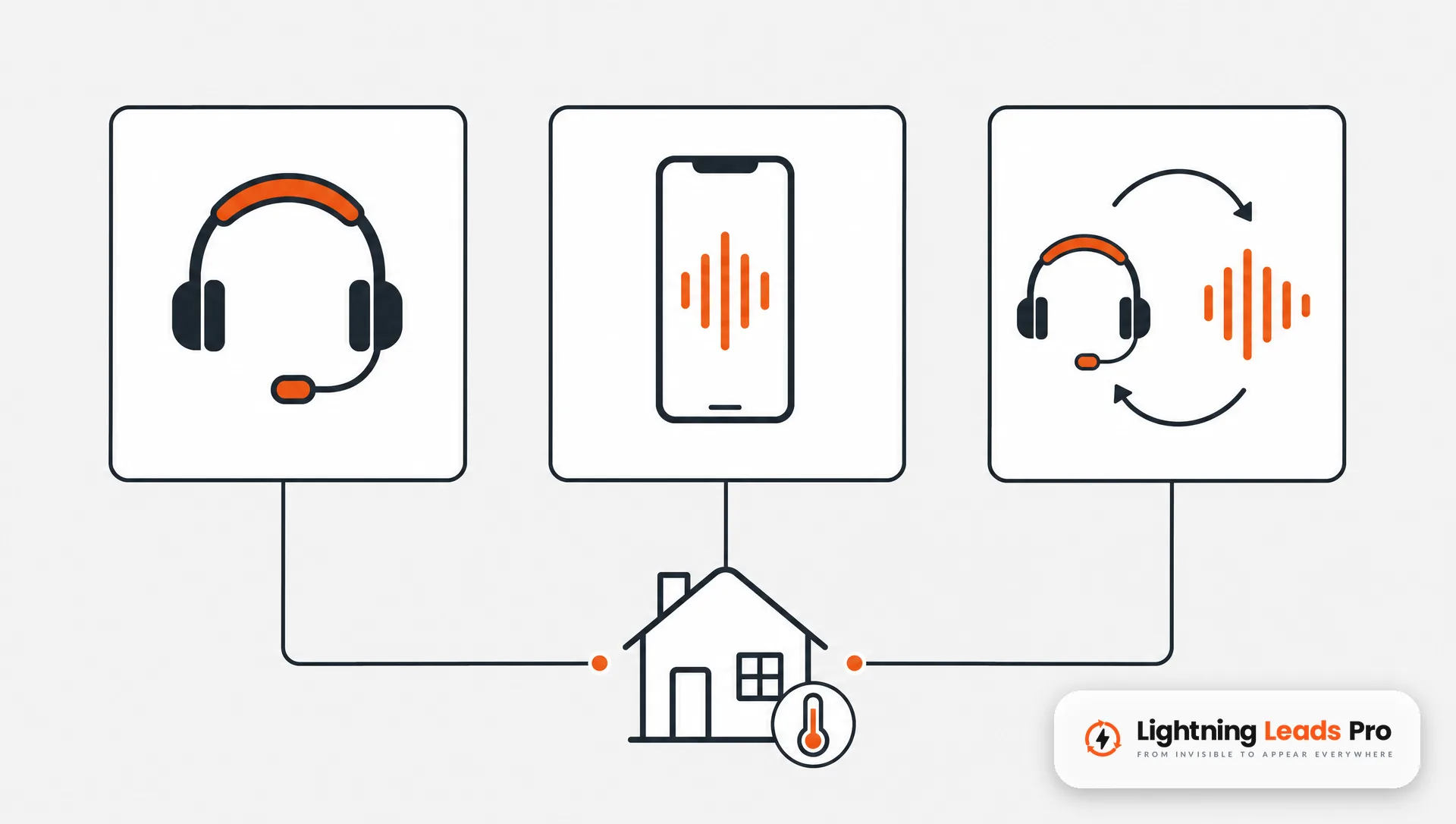
An HVAC answering service makes sure a real conversation happens on that call. You have three main choices: a live answering service, an AI receptionist, or a hybrid of both. The right pick depends on your call volume and how you dispatch emergencies. It also depends on how much control you want over the script.
This guide covers what each option does well and what to ask a provider. It also covers red flags and how to test a service before you sign.
What an HVAC answering service should handle on a no-heat night
A no-heat call at night is not a normal message. The caller is cold, often worried, and ready to book whoever picks up. Some providers sell this as an HVAC call center. Either way, it needs to do more than take a name and number.
At a minimum, the service should do these things:
- Answer with your business name and sound like part of your team.
- Ask the questions your dispatcher would ask: no heat, no cooling, a strange smell, a leak, or routine service.
- Tell a true emergency from a call that can wait until morning.
- Reach your on-call technician fast when the job is urgent.
- Book or hold a time slot for calls that can wait.
- Send you a clear record of every call.
Safety calls need their own script. If a caller says their carbon monoxide alarm is going off, the first step is not booking a visit. Washington’s State Fire Marshal’s Office says to move everyone outside to fresh air right away and call 911. Write that step into your script before cold weather arrives.
Live answering service, AI receptionist, or hybrid: what each does well
Live answering service. Trained human agents answer your calls from a call center. People are good with upset callers, odd questions, and calls that do not fit a script. The tradeoff is that agents cover many businesses, so quality depends on training and staffing on a busy night.
AI receptionist. Software answers the call with a natural voice. An AI receptionist for HVAC companies can pick up many calls at once. It follows your script the same way every time. If it is connected to your calendar, it can book the job. It can struggle with bad cell connections, heavy background noise, or a caller who goes far off script.
Hybrid. The AI answers first and handles routine calls, like booking a fall tune-up. When a call is urgent or confusing, it hands off to a live agent or your on-call tech. It does the same when a caller asks for a person. This setup suits shops that want speed without losing a human voice on the hard calls.
Here is a simple way to decide:
- Mostly routine calls and booking requests: an AI receptionist may cover most of them.
- Lots of emergencies, complex systems, or commercial accounts: lean toward live agents.
- A mix of both, or seasons that swing hard: a hybrid gives each weak spot a backup.
Questions to ask any HVAC answering service before you sign
Every provider sounds good on a sales call. These questions show you how the service works when your phone rings at night.
Can I write and change the call script?
You should control what callers hear. Ask who writes the script, how fast changes go live, and whether you can add seasonal questions. In heating season, you might ask about the furnace type, its age, and whether the home has any heat.
How do you decide what counts as an emergency?
Give the provider your rules, not theirs. Ask how they reach your on-call tech and how many times they try. Then ask what happens if the tech does not answer. Get the escalation path in writing, with a backup contact.
Can you book jobs straight into my calendar?
Some services only take messages. Others book into your scheduling or field service software. Ask which software they connect to, whether booking costs extra, and how they prevent double booking.
Do you offer Spanish or bilingual coverage?
Spanish was the most common language other than English spoken in U.S. homes in 2019, according to the U.S. Census Bureau. If you serve Spanish-speaking homeowners, ask whether a fluent agent or a Spanish AI voice answers. Then ask whether Spanish coverage runs around the clock or only during set hours.
Do you record calls, and who can hear them?
Recordings help you train staff, settle disputes, and check quality. Federal law allows recording when one party to the call consents. State laws can be stricter, so check with your attorney. Ask how the provider handles recording notices.
How does the handoff to my team work?
A good call means little if the details never reach your tech. Ask how you get each call: text, email, an app, or a note in your software. The summary should include the caller’s name, address, problem, and what they were promised.
Who owns the call data if I leave?
Your customer list is part of your business. Ask in writing who owns recordings, transcripts, and contact records. Ask how you export them, in what format, and whether you keep your phone number if you cancel.
How HVAC answering service pricing usually works
Pricing models vary more than most owners expect. Some services bill by the call. Others bill by agent minutes.
AI receptionists are often sold as a monthly plan with a set number of calls or minutes. Hybrid plans may mix both. Watch for features sold as add-ons, such as booking, call recording, a Spanish line, or extra transfer numbers.
Before you compare quotes, pull your own numbers. Count your calls by hour and by month for the past year. A plan that fits a quiet October may not fit a January cold snap.
Red flags to watch for
Walk away, or at least slow down, if you see any of these:
- The script is “standard” and you cannot change it.
- There is no clear plan for when your on-call tech does not answer.
- The contract is long and has no trial period or test window.
- Answers about who owns your recordings and customer data stay vague.
- Spanish support turns out to be a translation line or limited hours.
- Extra fees show up only deep in the contract.
- The AI cannot pass a caller to a person when asked.
One more: be careful if the provider also makes outbound calls with an AI voice. The FCC announced in February 2024 that AI-generated voices count as artificial voices under the Telephone Consumer Protection Act. Outbound AI calls need the right consent, so ask how the provider handles it.
How to test an HVAC answering service before you sign
Do not rely on a demo. A demo runs on the provider’s best script with their best agent. Ask for a trial on your own number, or a test line set up with your script.
Then make these test calls yourself, or have a friend make them:
- Call late on a weeknight and report no heat with kids in the house.
- Call on a busy afternoon and ask to book a fall tune-up.
- Call from a car with road noise and talk fast.
- Call in Spanish if you serve Spanish-speaking homeowners.
- Say your carbon monoxide alarm is going off and see if they tell you to get out first.
- Ask a question they cannot answer and see how they hand it off.
- Ask to speak with a person and time how long it takes.
After each call, check what reached you. Was the summary right? Did your on-call tech get the alert? Was the job booked in the right slot?
Score every test call the same way. Did they answer fast, follow your script, get the facts right, and treat the caller well? Compare providers side by side before you decide.

Where an answering service fits in your lead flow
An answering service covers the phone. It does not fix slow replies to web forms, texts, or daytime missed calls. We cover speed in our guide on lead response time for home services. The wider system is in how AI protects your leads.
Calls also have to come in before anyone can answer them. When a homeowner searches for help on a cold night, your business needs to show up. Steady work on local SEO helps bring those calls in, and your answering service turns them into booked jobs.
Want the AI side built and connected for you? Our AI automation service sets up an AI voice agent for calls, text follow-up, and booking. It is built around the way your shop already runs.
Frequently asked questions
What is the difference between an HVAC answering service and a virtual receptionist?
The terms overlap. An answering service often means a call center that takes messages and dispatches emergencies. A virtual receptionist may go further, with booking, transfers, and intake. Ask each provider exactly what their agents or AI will do on your calls.
Can an AI receptionist handle HVAC emergency calls?
It can follow an emergency script and alert your on-call tech. Test it on hard calls first, like a panicked caller or a bad connection. Ask whether you can set the AI to pass urgent calls straight to a person.
Do I need 24/7 coverage or only after hours?
Look at when your missed calls happen. If you miss calls on busy days too, overflow coverage helps. If your office handles the day well, an after-hours answering service for HVAC may be enough.
How long does it take to set up an answering service?
It depends on the provider and how much you connect. A simple message-taking setup is faster than one that books into your software. Ask for a written timeline and a test period before you forward live calls.
Can I keep my business phone number?
In most setups, yes. Many services work by forwarding your calls to them. Confirm this in writing, and make sure you can stop forwarding at any time.
Get your after-hours calls covered before the first cold snap
Heating season is here. The best time to choose and test an HVAC answering service is before the busy nights start, not during them.
Want a second set of eyes on how calls reach you and where they slip through? Book a Free Local Lead Growth Session. We will walk through your call flow, your local visibility, and your follow-up with you.