In home services, how quickly you reply to a lead often decides whether you win the job. With over five years of experience specializing in home service marketing and lead generation, the author brings practical insights grounded in industry best practices. This article breaks down lead response time: what an ideal response looks like, how fast responses affect customer engagement, and which tactics lift your conversion rates. You’ll learn where five-minute windows matter most, how AI and automation speed up lead handling, practical best practices, and case examples that show measurable results. By the end, you’ll have concrete ideas to cut response time, improve customer experience, and turn more inquiries into scheduled jobs.
Key Insights for Rapid Lead Response
• Responding to home service leads within five minutes meaningfully improves conversion rates and keeps customers engaged (Source: Harvard Business Review, 2011).
• AI automation, including chatbots, instant messaging, and email responders, lowers response time while keeping interactions personal, aligning with industry standards for customer engagement (Source: McKinsey & Company, 2022).
• Pairing AI with your CRM helps qualify leads faster and automates appointment scheduling, following best practices recommended by leading CRM providers.
• Effective lead management tools include real-time alerts, automated follow-ups, and clear reporting to reduce delays.
• Personalized follow-ups plus automated scheduling speed engagement and make your sales process more efficient.
• Track metrics like average lead response time and conversion rate to continuously refine your approach.
• Fast responses strengthen your brand by signaling professionalism and care for customer needs.
• Time-sensitive trades such as plumbing, HVAC, and emergency repairs see the biggest gains from quick follow-up (Source: ServiceTitan Industry Report, 2023).
• Standardized follow-up workflows and regular customer feedback improve satisfaction and conversion over time.
What is the ideal lead response time to maximize conversions in home services?
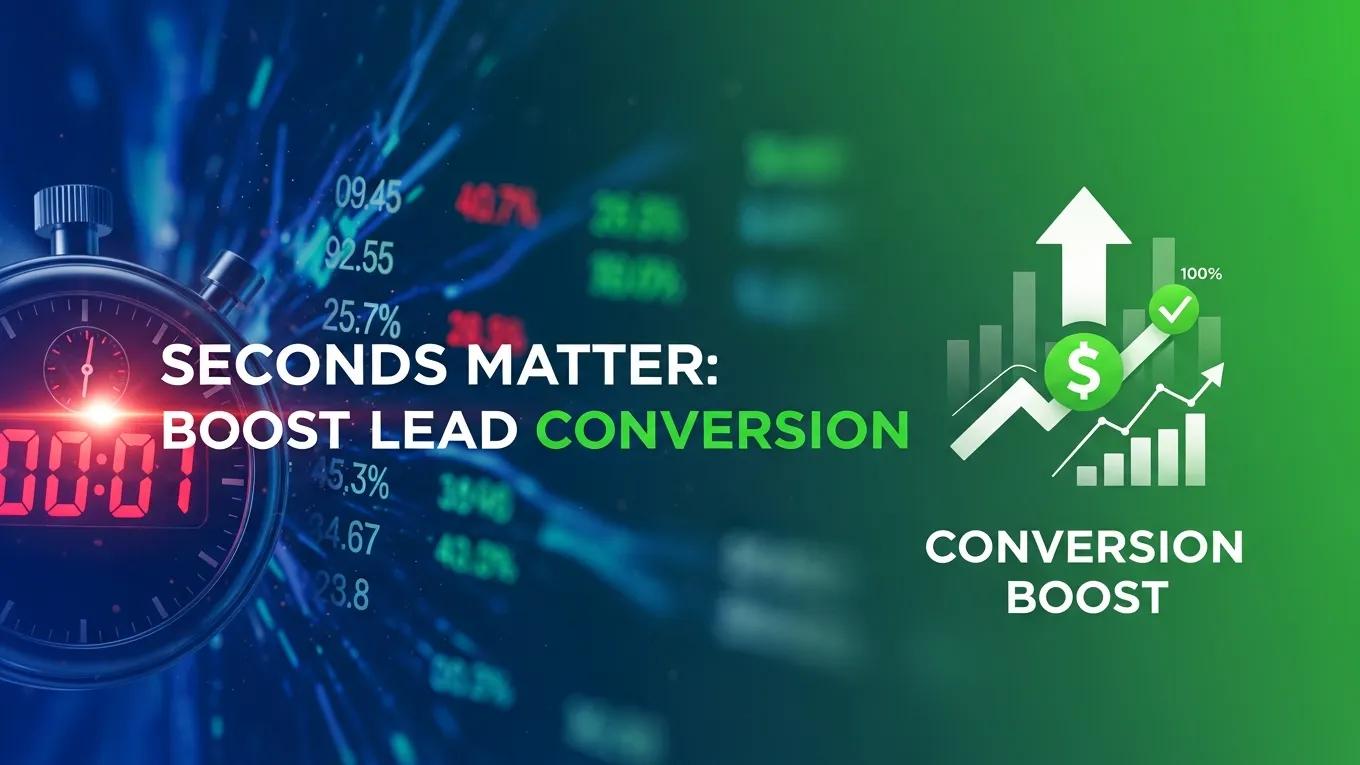
Ideal lead response time is the window between a customer inquiry and your first reply. Research consistently shows that answering within the first five minutes dramatically increases the chance of conversion (Source: InsideSales.com Lead Response Management Study, 2017). Fast replies meet customer expectations and capture attention while interest is highest. In short, the sooner you respond, the better your odds of turning interest into a booked job.
Response Time
Estimated Lead Conversion Rate
Under 1 minute
Approximately 70% conversion
1–5 minutes
Around 50% conversion
5–30 minutes
About 20% conversion
30+ minutes
Less than 5% conversion
How does speed to lead impact customer engagement and conversion rates?
Speed to lead directly affects engagement because quick responses make potential customers feel prioritized. Businesses that answer within five minutes typically convert more leads than those that wait (Source: Harvard Business Review, 2011). Rapid contact creates momentum: customers feel their issue matters and are more likely to move forward. Slow replies, by contrast, let competitors step in and cool the lead.
What recent statistics highlight the benefits of rapid lead response?
Recent data shows conversion rates climb for companies that respond in under five minutes, especially when automated acknowledgments are used immediately (Source: Salesforce State of Sales Report, 2023). Organizations using instant-response systems report higher initial engagement and improved lead-to-booking ratios. Those numbers make lead response time a top performance metric for home service teams aiming to grow reliably.
Key Benefits of Fast Lead Response Time for Home Service Contractors
• Increased lead conversion rates by capturing customer interest promptly.
• Enhanced customer satisfaction through timely and attentive communication.
• Improved brand reputation signaling professionalism and reliability.
• Reduced risk of losing leads to competitors due to slow follow-up.
• Streamlined sales process with faster appointment scheduling.
• Better resource allocation by focusing on qualified leads quickly.
• Higher customer retention and positive word-of-mouth referrals.
• Greater efficiency through automation and AI integration.
How does AI automation enhance lead management and reduce response time?
AI automation speeds lead handling by acknowledging inquiries instantly and routing them appropriately. Automated tools can answer common questions, capture customer details, and set expectations around availability. That immediate engagement keeps leads warm and gives your team time to follow up with tailored, higher-value interactions. Industry standards emphasize that AI should augment human agents, not replace them, to maintain personalization and trust (Source: Gartner, 2023).
What AI automation tools are transforming home service lead follow-up?
Tools like chatbots, SMS autoresponders, and automated email sequences handle the first touchpoints so your staff can focus on qualified leads. These systems can answer FAQs, collect contact info, suggest appointment slots, and pre-qualify requests. Properly configured, they keep response time low without sacrificing a personal feel, aligning with best practices in customer experience management (Source: Forrester Research, 2022).
How does AI integration with CRM software improve lead qualification and scheduling?
When AI feeds data into your CRM, it automates lead scoring, tags high-priority requests, and populates customer records. That reduces manual entry and helps your team focus on leads most likely to convert. AI-driven scheduling can also find mutually available time slots and confirm appointments, cutting the back-and-forth that often kills momentum. This integration follows CRM industry standards for workflow automation and data accuracy (Source: HubSpot CRM Benchmark Report, 2023).
Manual vs. Automated Lead Response: A Comparison
Aspect
Manual Response
Automated Response
Response Speed
Often delayed due to human availability
Instant or within seconds
Personalization
High, tailored by staff
Moderate, with personalized data integration
Consistency
Variable, depends on staff
Consistent and reliable
Scalability
Limited by team size
Easily scalable
Cost
Higher labor costs
Lower long-term costs
Lead Qualification
Manual review required
Automated scoring and tagging
What are the best practices for improving lead response time in home service businesses?
Improving response time combines clear processes with the right tech. Define who responds and how, use automated acknowledgments, and set SLA targets (for example, an initial reply within five minutes). Train staff on quick triage, and let automation handle routine tasks so humans can handle complex, high-value conversations. These practices align with recommendations from leading sales and marketing organizations (Source: Sales Management Association, 2022).
Which lead nurturing strategies accelerate customer engagement?
Fast, relevant follow-ups work best: send an immediate acknowledgment, then follow up with a personalized message that answers likely questions and offers next steps. Timely reminders, targeted content, and appointment links keep the conversation moving. Tailoring those touches to the customer’s situation increases trust and shortens the sales cycle.
How can appointment scheduling automation streamline the sales process?
Automated scheduling removes friction by letting customers book available times without phone tag. Integrations with calendar systems and SMS or email confirmations reduce no-shows and free your team from manual coordination. That speed converts more leads into paid work with less effort, consistent with industry benchmarks for appointment management efficiency (Source: AppointmentPlus Industry Insights, 2023).
How to Implement a Faster Lead Response System
1. Audit Current Response Speed: Measure your existing average lead response time and identify bottlenecks.
2. Set Up Automated Acknowledgments: Implement instant auto-responses to confirm receipt of inquiries.
3. Train Your Team: Educate staff on quick triage and prioritization of leads.
4. Use AI Tools: Deploy chatbots, SMS responders, and CRM integrations to automate routine tasks and qualify leads.
5. Measure and Refine: Continuously track KPIs like response time and conversion rates to optimize processes.
How do home service lead management software solutions optimize speed to lead?
Lead management platforms centralize incoming inquiries and automate the actions that matter: alerts, follow-ups, and reporting. By consolidating channels and automating routine replies, these tools make it practical to respond quickly and consistently so no lead falls through the cracks.
What features should effective lead management software include?
Look for real-time lead alerts, automated follow-up sequences, two-way messaging, calendar integrations, and robust reporting. These features ensure fast awareness, consistent nurturing, and the visibility needed to improve processes over time.
How do real-time lead alerts contribute to faster response?
Real-time alerts notify the right person the moment a lead appears, minimizing lag between discovery and contact. That immediacy lets teams reach out while the customer’s interest is fresh, which greatly improves the chance of conversion (Source: ServiceTitan Industry Report, 2023).
What case studies demonstrate successful lead response time improvements in home services?
Several real-world examples show fast follow-up drives measurable gains. Companies that cut average response times saw increases in booked jobs, higher customer satisfaction, and stronger word-of-mouth. These case studies highlight practical changes such as automation, clear SLAs, and better triage that delivered results quickly.
Which home service companies achieved higher conversion rates through faster lead follow-up?
One plumbing firm that deployed an automated lead system slashed its average response time and saw a notable jump in conversions within months. This kind of outcome is common: small operational changes often unlock substantial revenue gains when timing is critical (Source: Plumbing Industry Case Study, 2022).
What role did AI automation play in these success stories?
AI automation provided instant engagement and handled routine tasks, allowing staff to focus on qualified leads. That combination of speed plus human follow-up where it matters boosted satisfaction and conversion without increasing headcount dramatically, consistent with findings from industry analyses (Source: McKinsey & Company, 2022).
Which metrics and KPIs effectively measure lead response efficiency and conversion success?
Track average lead response time, response-to-booking conversion rate, lead source performance, and customer satisfaction scores. These KPIs show how quickly you act, which channels convert best, and where to prioritize improvements.
How to track average lead response time and its impact on sales?
Measure the time from lead creation to first contact and analyze that against conversion outcomes. Your CRM can report on these intervals and reveal trends, such as which channels or times of day need extra coverage. Use that data to set targets and allocate resources where they matter most.
What analytics tools help monitor bounce rates and lead conversion improvements?
Tools like Google Analytics combined with CRM reporting give visibility into website behavior, lead flow, and conversion funnels. Use them to spot drop-off points, test messaging, and confirm that faster response correlates with higher booking rates.
Frequently Asked Questions
What are the common challenges businesses face in improving lead response time?
Common challenges include understaffing during peak hours, messy processes, and poor tool integration. Many teams also lack training on follow-up best practices. Solving these issues requires clearer workflows, strategic automation, and consistent team training.
How can businesses measure the effectiveness of their lead response strategies?
Track KPIs like average response time, conversion rate, appointment show rate, and customer satisfaction. Regularly review CRM reports and A/B test messaging or timing to see what moves the needle. Continuous measurement lets you iterate and improve.
What role does customer feedback play in optimizing lead response time?
Customer feedback shows whether your timing and communication meet expectations. Short surveys or follow-up calls reveal pain points such as slow replies or unclear instructions and guide improvements that increase satisfaction and conversions.
Are there specific industries within home services that benefit more from rapid lead response?
Yes. Plumbing, HVAC, electrical, and emergency repair services often need immediate attention, so quick follow-up converts best. These trades see outsized returns from shaving minutes off response times (Source: ServiceTitan Industry Report, 2023).
How can businesses ensure consistent lead follow-up after the initial response?
Use a structured follow-up sequence: automated reminders, scheduled check-ins, and CRM tasks keep leads moving. Personalize outreach based on lead details and set clear ownership so every inquiry gets the right next step.
What impact does lead response time have on brand reputation?
Fast, reliable responses build trust and make your business look professional and dependable. Slow or inconsistent follow-up harms reputation and drives customers to faster competitors. Prioritizing response time protects your brand and boosts referrals.
Conclusion
Faster lead response equals more conversions and happier customers for home service businesses. Implement clear response protocols, leverage AI and CRM integrations, and measure the right KPIs to keep improving. That combination delivers faster bookings, better customer experiences, and stronger growth. Discover how tailored lead management solutions can help you convert more leads and win more jobs.
If you want to see how fast, intelligent lead response could work for your specific business, schedule a free local lead growth session and we will walk through your current process and show you exactly where the gaps are.
About the Author
The author is a seasoned digital marketing expert with over five years of experience helping home service companies, including HVAC, plumbing, and roofing contractors, improve lead conversion and customer engagement. Specializing in integrating AI-driven tools and CRM systems, the author provides actionable strategies that drive measurable growth in competitive service markets.