HVAC email marketing is one of the simplest ways to bring past customers back. You already did the hard work. They called, you fixed the system, and they paid. A few short emails a year remind them who to call next time.
You do not need a big newsletter or a fancy design. Most HVAC companies can start with four emails: tune-up reminders, maintenance plan renewals, review requests and seasonal tips. Send them at the right time of year, keep them short, and follow the email rules.
This guide walks you through it step by step. You will build a clean list and set up a basic tool. Then you will plan, write and measure your emails and stay compliant.
Why HVAC email marketing works with past customers
Your past customers already know your name and your work. They have a furnace or an AC that will need service again. The question is whether they remember you when it does, or search for someone new.
Email keeps your name in front of them between visits. It costs little to send and you own the list. You keep the list, even if you change tools.
Email also works best with people who know you. That is why this guide focuses on past customers, not cold lists. Cold email to strangers is a different job with different risks.
Step 1: Build your HVAC email list with consent
Your list already exists. It sits in your invoices, your field service software and your phone. The first job is to pull those addresses into one place and clean them up.
The second job is to collect email addresses the right way going forward. The best practice is simple. Ask, tell people what you will send, and keep a record of their yes.
- At booking. Your office asks for an email when the call comes in. Say you will send the appointment details and seasonal reminders.
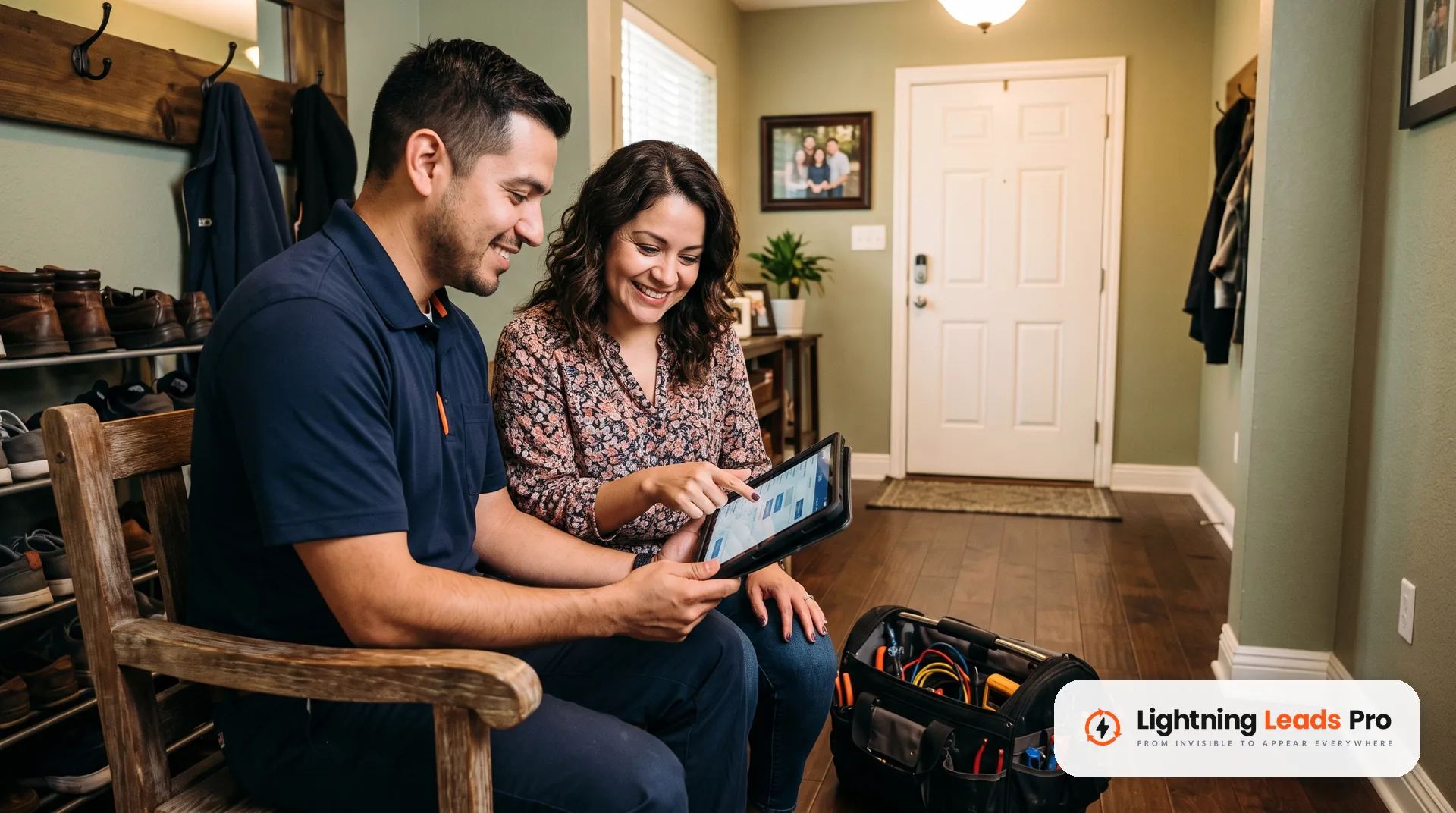
- At the end of the visit. The tech confirms the email on a tablet or the invoice. A checkbox for reminders and tips keeps it clear.
- On your website. Add an optional box to your booking form for maintenance reminders.
- On maintenance plan signups. Plan members expect reminders, so ask for the best email to use.
Never buy a list or add strangers you found online. Those people never asked to hear from you. They did not ask to hear from you, so they may mark you as spam. Spam reports can hurt delivery.
Keep your list tidy. Note where each address came from and when. Remove addresses that bounce. Honor every unsubscribe right away.
Step 2: Set up a simple email tool the right way
Do not send marketing emails one by one from your regular inbox. You lose track of who opted out, and you cannot see what worked. Use an email tool or the email feature inside your CRM.
If you already use a CRM, start there. Our guide on how to choose an HVAC CRM covers what to look for. The email side should let you send to groups, schedule emails and track clicks and unsubscribes.
Three setup items matter before your first send:
- Send from your own domain. Use an address like service@yourcompany.com, not a free Gmail or Yahoo address.
- Set up email authentication. Google’s sender guidelines ask all senders to set up SPF or DKIM. Bulk senders also need DMARC. Your web host or IT person can add these records.
- Use a clear from name. Your company name, or the owner’s name plus the company, is what people recognize.
Google asks senders to keep spam rates in Postmaster Tools below 0.1% and never reach 0.3%. Senders of more than 5,000 messages a day must offer one-click unsubscribe. Your list may be far smaller, but the habits are worth building now.
Step 3: Send the four HVAC emails that matter most
You can send many kinds of emails. These four do most of the work for an HVAC company. Each one has a clear reason to exist and one clear action.
Seasonal tune-up reminders
This is your most useful email. ENERGY STAR’s maintenance checklist tells homeowners to check cooling in the spring and heating in the fall. Your reminder simply points to that habit and makes booking easy.
Send it to everyone who had service in the last year or two. Use one button or link to book. If you have online booking, link right to it.
Maintenance plan renewals
Plan members are your best customers. Their plan should never lapse because nobody reminded them. Set up a short series before the renewal date.
- About 30 days before: a friendly note that the plan renews soon, with what it includes.
- About 7 days before: a short reminder with the renewal link.
- After it renews: a thank-you and a link to book the next visit.
A good AI automation setup can send these on its own when the renewal date comes up. Your office then only handles the replies.
Review requests
Send a review request the same day a job is finished. Keep it to two or three sentences and one link. Google suggests you ask customers to use a Google link or scan a QR code.
Ask every customer, not only the happy ones. Google’s content policy says businesses may not selectively solicit positive reviews. Its review help page also says incentives for reviews are strictly prohibited. Our reputation management work keeps this process steady after every job.
Heating season tips
Not every email should ask for a sale. A short tip email builds trust and keeps people opening your emails. Good topics are simple and useful.
- How often to check the furnace filter. ENERGY STAR says to inspect, clean or change it once a month.
- What to check before calling for no heat, such as the thermostat setting and the breaker.
- Signs that a system needs a visit, like strange noises, short cycling or uneven heat.
- What to do with a smart thermostat when the family travels for the holidays.
End each tip email with a soft offer to help, like a link to book a visit. That is enough.
Step 4: Time your emails to the HVAC seasons
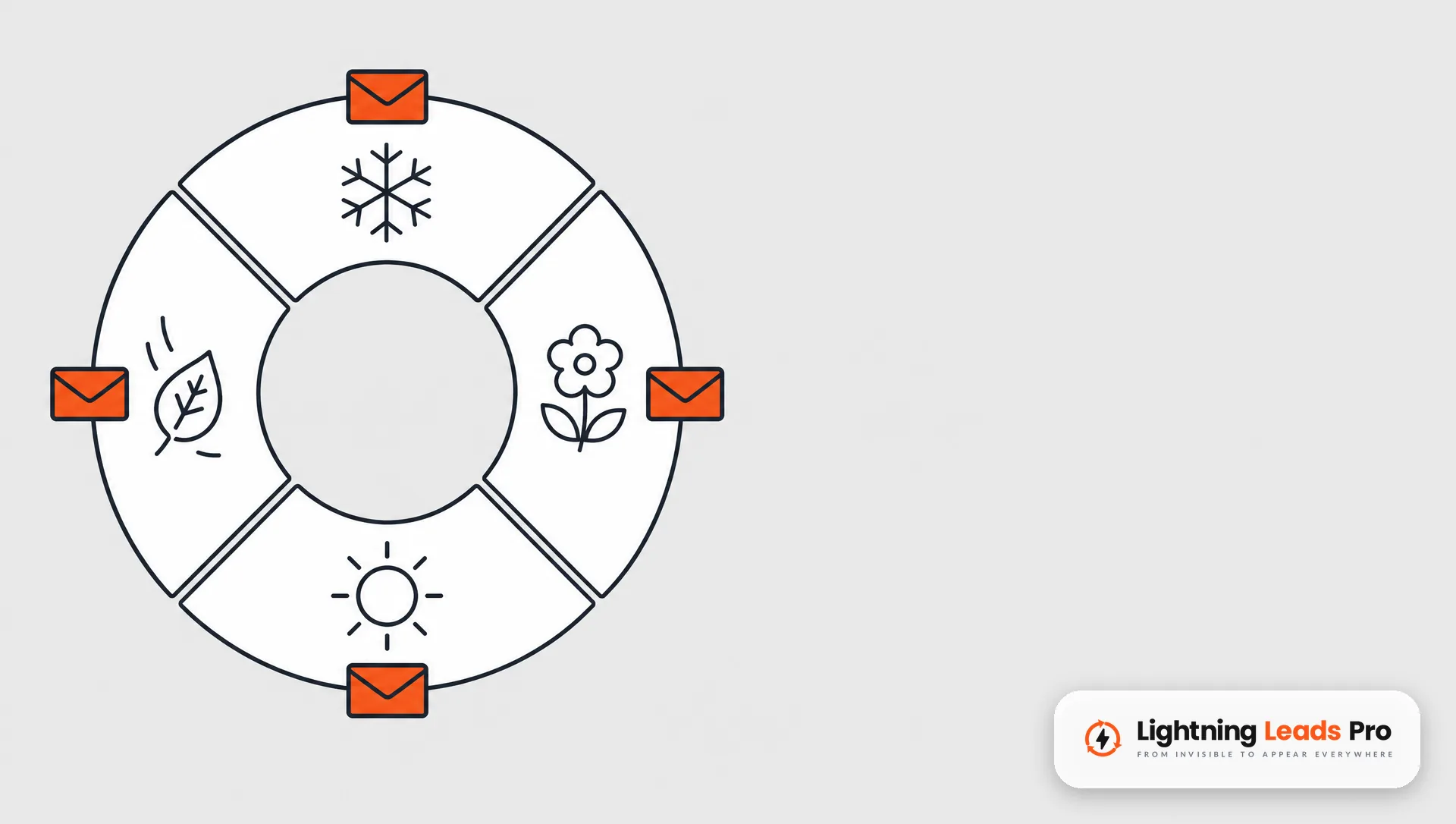
HVAC demand follows the weather, so your emails should too. A simple yearly calendar keeps you from sending too much or going silent for months.
- Fall (September to November): heating tune-up reminders, plan renewals and a heating tip email.
- Winter (December to February): a no-heat checklist, filter reminders and a thank-you note to plan members.
- Spring (March to May): AC tune-up reminders before the first hot week.
- Summer (June to August): a cooling tip email. If your plan offers priority service, remind members.
Review requests and renewal emails run all year. They go out based on the job date or the renewal date, not the season.
Adjust the months to your climate. A shop in a warm state may push cooling emails earlier and heating emails later. For more fall ideas beyond email, see our list of HVAC marketing ideas for heating season.
Step 5: Write short HVAC emails people read
Many of your customers will read your email on a phone. Short wins. Aim for a few short lines, one main point and one link.
- Write a plain subject line. “Time for your fall furnace check” beats a clever one. It must also match what is inside.
- Use their first name if your list has it.
- Say one thing. One reason to act, one link or button.
- Sound like a person. Write the way your office would talk on the phone.
- Sign it with a real name and your company name.
Here is a simple fall reminder you can adapt:
Subject: Time for your fall heating check
Hi [First name], cold weather is on the way. A fall check helps your furnace start the season clean and tuned. You can pick a time that works for you here. Thanks for trusting us with your home. [Your name], [Your company].
If you run a referral program, a short line at the bottom of some emails can mention it. Our guide to setting up an HVAC referral program covers how to keep that clean.
Step 6: Measure what matters
Your email tool will show many numbers. Only a few of them tell you if email is paying off.
- Clicks. How many people clicked your booking or review link.
- Booked jobs. How many visits came from each email. Tag these in your CRM or ask callers where they heard about you.
- Unsubscribes. A few are normal. A jump after one email means that email missed the mark.
- Spam complaints. Keep these as close to zero as you can. Google’s guidelines give the limits.
- Bounces. Remove bad addresses so your list stays clean.
Treat open rates with care. When turned on, Apple’s Mail Privacy Protection loads remote content in the background when a message arrives. That means some opens are counted even if the person never read the email. Clicks and booked jobs are the better signals.
Check your numbers once a month. Keep what books jobs, and change or drop what does not.
Stay compliant: CAN-SPAM basics for HVAC companies
Marketing emails in the U.S. fall under the CAN-SPAM Act. The FTC’s CAN-SPAM compliance guide for business lays out the rules in plain words. Here are the main points.
- Do not use false or misleading header information, such as the from name or reply-to address.
- Do not use a misleading subject line.
- Make it clear the message is an ad when it is one.
- Include a valid physical postal address.
- Tell people how to opt out, and make it easy.
- Honor opt-out requests within 10 business days.
- You stay responsible even if someone else sends the email for you.
The FTC guide says each email that breaks the law can bring penalties of up to $53,088. It also explains that transactional messages, like an appointment confirmation, are treated differently from marketing messages. A tune-up reminder with an offer is marketing, so give it the full treatment.
This is general information, not legal advice. If you have questions about your own emails, talk with an attorney.
Frequently asked questions
How often should an HVAC company send marketing emails?
Many HVAC companies do well with one or two marketing emails a month. Add the automatic ones, like review requests and renewal reminders, on top. If unsubscribes or spam complaints rise, send less.
What should HVAC companies put in a marketing email?
Start with tune-up reminders, maintenance plan renewals, review requests and seasonal tips. Each email should have one main point and one link. Keep it short enough to read on a phone.
Do I need permission to email my past customers?
CAN-SPAM focuses on honest emails and an easy opt-out. Asking first is still the best practice and the safer habit. For legal questions about your list, ask an attorney.
Are appointment reminders covered by CAN-SPAM?
The FTC guide says transactional messages, which help complete a deal the customer already agreed to, are treated differently. Messages to existing customers are not automatically transactional, though. If an email promotes a service or an offer, treat it as marketing.
Is email marketing worth it for a small HVAC company?
It can be, because the cost is low and the list is yours. The value depends on the size of your customer list and how well you follow up. Track booked jobs from each email to see what it does for you.
Get your past customers booking again
HVAC email marketing does not need to be complex. Build a clean list with consent and send four kinds of useful emails. Time them to the seasons and measure booked jobs. Then let automation handle the sending so your office can handle the calls.
Want help setting up reminders, renewals and review requests that run on their own? Book a Free Local Lead Growth Session and we will look at your follow-up together.